Everyday Home Solutions
Where to Find Your Home's Main Water Shutoff Valve
Learn where to look for your home's main water shutoff valve, how to identify it, and what to do if it is stuck, inaccessible, or difficult to find.
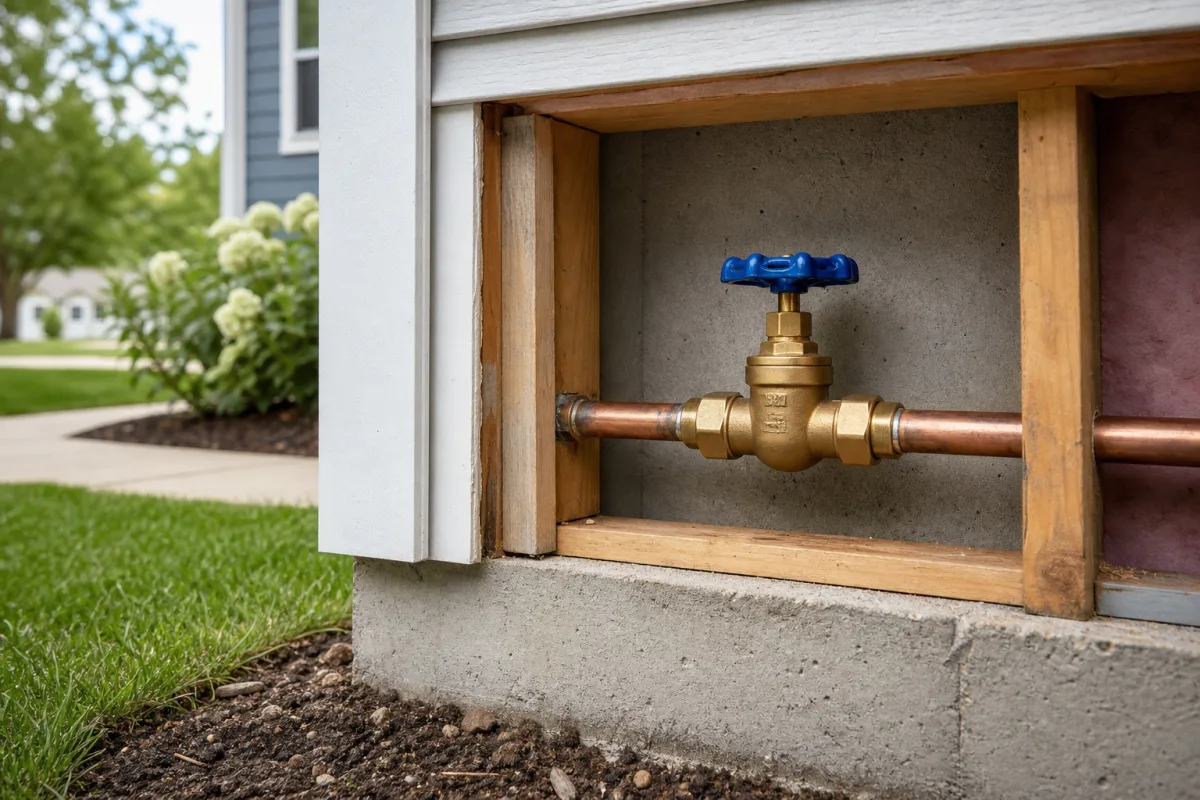
A burst pipe can release a surprising amount of water in a short time. Knowing where your home’s main water shutoff valve is—and how to use it—can limit damage while you wait for a plumber or your water utility.
The best time to find it is before an emergency. Take a few minutes to trace your incoming water line, identify the correct valve, and make sure it can be reached safely.
What the Main Water Shutoff Valve Does
The main water shutoff valve controls the domestic water supply entering your home. When it is closed, it usually stops water to fixtures and appliances supplied by that line, including sinks, toilets, showers, dishwashers, and washing machines.
It is not the same as a fixture shutoff valve. Small valves beneath a sink, behind a toilet, or beside a washing machine isolate only that fixture. The main shutoff is installed on the incoming service line before the plumbing branches out through the house.
Some systems may have separate supplies or valves. For example, irrigation systems, private wells, fire-sprinkler systems, and water-treatment equipment may not be controlled by the same valve. Closing the main valve also does not empty pipes that are already full of water.
If there is an active leak, turn off the water first. Avoid standing water near electrical panels, outlets, appliances, or extension cords. Once the supply is off and the area is safe, opening a cold-water faucet can relieve pressure in the plumbing—but it will not stop water already escaping from a broken pipe.
Start by Finding the Water Meter and Service Line
The simplest way to locate the main shutoff is to follow the water service line: the pipe that brings utility water into the home. The home’s main valve is commonly located just after this pipe enters the building.
First, look for the water meter. Depending on the home and local utility layout, it may be located:
- In a basement, utility room, garage, or mechanical room
- Near an exterior wall where the service pipe enters the building
- In an outdoor meter box near the curb, sidewalk, or property line
From the meter or the point where the pipe enters the structure, look for the incoming cold-water pipe and follow it inward. The main shutoff should be on this pipe before it feeds the rest of the home’s plumbing.
Important: A valve in a curbside meter box may belong to the water utility. Do not operate a utility-owned valve unless your provider specifically says it is customer-operated. If there is no accessible home-side shutoff during an emergency, contact the utility or a licensed plumber.
Common Indoor Locations to Check
Indoor shutoff valves are particularly common in areas with cold winters, where the incoming water line is routed through protected space. Check close to the service-line entry point first.
Typical locations include:
- Basement: Along a foundation wall, often near the front of the house or near the meter
- Crawlspace: Near the point where the pipe enters the foundation; use adequate lighting and avoid unsafe confined spaces
- Utility or mechanical room: Near a furnace, water-treatment equipment, or other building systems
- Garage: Often on an exterior-facing wall
- Laundry room: Especially in homes where plumbing equipment is grouped together
- Near the water heater: The main valve may be nearby, but a valve immediately above the heater may only serve the heater
The key detail is location on the pipe: the correct valve should be upstream of the branches that serve fixtures throughout the house.
Common Outdoor Locations to Check
In warm climates, the main shutoff may be outside rather than in a basement or mechanical room. It may be inside a covered box, recessed panel, or small utility enclosure.
Look in these places:
- A valve box near the foundation
- An exterior wall near the water service entry point
- A utility enclosure near water equipment
- A meter box near the property line, but only if your water provider identifies a customer-operated valve
Do not mistake an irrigation valve for the domestic-water main. Irrigation controls typically serve sprinklers or landscape watering only; the main domestic shutoff is on the line supplying water to the house.
How to Identify the Valve Type
Most main shutoff valves have either a lever handle or a round, multi-turn wheel handle.
| Valve type | What it looks like | How it is usually closed |
|---|---|---|
| Ball valve | Straight lever handle; turns about one-quarter turn | Turn the handle until it is perpendicular to the pipe |
| Multi-turn valve | Round wheel handle; may require several turns | Turn clockwise gently until it stops |
With a ball valve, a handle parallel to the pipe generally means the valve is open. A handle crossing the pipe at a right angle generally means it is closed.
Never force a valve that is seized, heavily corroded, leaking, or difficult to turn. Older multi-turn valves can fail when operated after years of disuse. If a valve is questionable, have a licensed plumber inspect, repair, or replace it rather than force it during an emergency.
What to Do If You Cannot Find or Use the Valve
If the main shutoff is not obvious, check records that may show the plumbing layout or service entrance, including:
- Home inspection reports
- Builder documents and renovation plans
- Plumbing invoices or maintenance records
- Information from your water utility about the meter and service connection
Call a licensed plumber if the valve is missing, hidden behind finished walls, blocked by storage, damaged, leaking, or unable to fully stop the water. A plumber can trace the service line and install a clearly accessible replacement valve if needed.
If you rent, ask the landlord or property manager to identify the main shutoff and provide emergency instructions. Do not modify building plumbing without permission.
Prepare Before a Plumbing Emergency
After you locate the valve, make it easy to use under pressure.
- Label it clearly as the main water shutoff.
- Show everyone in the household where it is and how it closes.
- Keep the area free of boxes, furniture, and other obstructions.
- Note whether it is a quarter-turn lever or a multi-turn wheel valve.
- Schedule service if it leaks, sticks, or does not completely shut off the water.
- Keep your water utility’s emergency number and a licensed plumber’s contact information available.
If the valve appears to be in good condition and you choose to test it, do so when water-dependent appliances are off and no one needs water. Reopen it slowly, check that water pressure returns normally, and inspect the valve for drips.
Be Ready Before Water Damage Starts
Finding your main water shutoff valve is a small home-maintenance task that can make a major difference during a leak or burst pipe. Trace the incoming water line, identify the correct valve, and resolve any access or condition problems before you need it.
If you are unsure which valve controls the home’s water supply—or if the valve does not operate smoothly—a licensed plumber can help you prepare safely.
Sources
- U.S. Environmental Protection Agency, Fix a Leak Week: Guidance on detecting and addressing household water leaks.
- American Red Cross, Water Safety: General safety guidance for water-related emergencies.
- International Association of Certified Home Inspectors, Water Shut-Off Valves: Overview of common residential shutoff valve locations and operation.